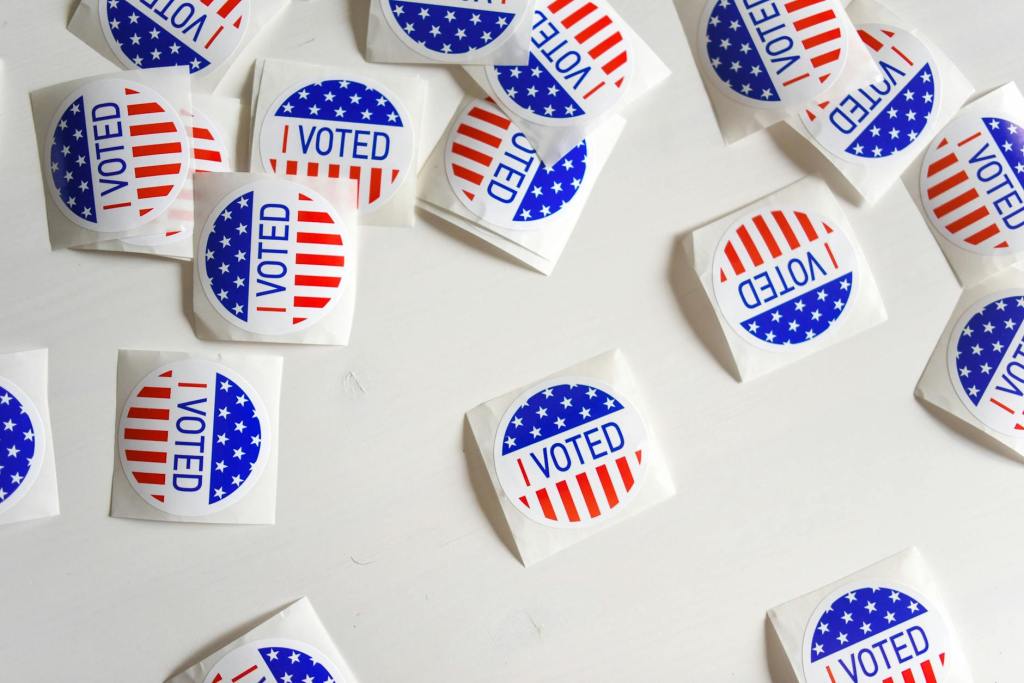
We are less than two months away from the 2024 election and it is no great surprise that discussion surrounding it is saturating much of our lives. As a follower of Christ, my desire is to represent him well in every area of my life, including with my vote and in my conversations about politics. While I do not want to downplay the importance of any election or the importance of your participation in them, I do want to be honest about what I personally find challenging, convicting, and encouraging about the ongoing discussions.
One particular challenge is that I find it difficult to respond with patience and grace rather than react with dismissal when drastic language is used. This difficulty, of course, speaks much more about my own attitude than it does the election and the discussion surrounding it. I have no control over the political climate or over how another person speaks, but I do control over how I respond in speech, deed, and attitude.
If you too have struggled with engaging with politics, know that you aren’t alone. Lately, I have found the following four reminders to be helpful and convicting, and I hope that they will be a source of encouragement to you too as we steadily move toward November 5.
1. All People are Image-Bearers, Not Enemies
All people, regardless of whether or not we agree with their lifestyles, behavior, or political affiliation, are image-bearers of God and thus have dignity and worth (Genesis 1:26-27). It is tempting to divide our friends, family members, neighbors, and coworkers into categories of “allies” or “enemies,” but in doing so we lose sight our their humanity. If we extend the benefit of the doubt to those around us and listen to their motivations, we will likely find that they are in the same position as us-they are simply another image-bearer doing what they genuinely believe to be the right thing.
What’s more, Ephesians 6:12 is clear that in this life, our battle is not “against flesh and blood (other image-bearers) but against the rulers, against the authorities, against the cosmic powers over this present darkness, against the spiritual forces of evil in the heavenly places.” To be clear, these spiritual forces of evil are not our neighbors, nor are they political candidates. Even if the candidates have made poor decisions in the past or have questionable policies, they are not the embodiment of evil. If you and I were to sit down with each of them and have a genuine conversation, we would likely find much more reasonable people that the characterizations that are projected to us through the media. I shutter to think at how I might be portrayed if my own past failures and poor choices of words were displayed for the entire world to judge. May we be diligent to see them as fellow image-bearers and pray for them often.
2. We are Called to Love One Another
There are a lot of ideas in our world and even in our churches about what love is, but what has been most helpful for me is to go back to the Bible’s definition of love. Well known 1 Corinthians 13:4-6 was not originally intended for weddings, but instead offers us clear guidelines for how members of the Church should love one another and those around us:
“Love is patient and kind; love does not envy or boast; it is not arrogant or rude. It does not insist on its own way; it is not irritable or resentful, it does not rejoice at wrongdoing, but rejoices with the truth. Love bears all things, believes all things, hopes all things, endures all things. “
If we are going to show love and respect to other image-bearers, our words and actions must display these descriptions of love. It is not loving to insist that I am 100% right, to lose patience when another person doesn’t agree with me, or to boast when an election goes my way. It is far more important to love another person well than it is to be what I perceive as right.
Further, we do not get a pass on loving one another simply because another person is rude or unkind. Jesus states explicitly in Luke 6:27-28, “love your enemies, do good to those who hate you, bless those who curse you, pray for those who persecute you.” This doesn’t mean allowing others to treat you as a doormat, but rather to “speak truth in love” and continue to treat other image-bearers with respect despite their actions (Ephesians 4:15).
3. Know When to Respond
One of the most difficult fruits of the Spirit to display is self-control (Galatians 5:22-23). Especially because it is a muscle that is uncomfortable and sometimes sacrificial to exercise, we often neglect it. Regarding politics, I find it much easier to practice self-control when engaging with a screen. On social media, we can simply not respond to a post or comment and you can “mute” a person, certain words, or topics. When we are watching TV, we can simply change the channel or, better yet, turn it off altogether. With media, we have much more autonomy over what we listen to, read, and watch.
But when it comes to in-person conversations, listening and using discernment is key. Proverbs 26:4-5 offers us wisdom on the topic: “Answer not a fool according to his folly, lest you be like him yourself. Answer a fool according to his folly, lest he be wise in his own eyes.” In other words, know when to answer and know when to walk away.
If someone is trying to bait you into an argument or if you know the conversation will be damaging to your relationship, choosing not to engage is often a sign of self-control and wisdom. Instead, simply listening to them or pausing the conversation altogether may be the right decision. However, if someone is blatantly sharing misinformation or fear-mongering, responding kindly with correction and truth is appropriate. When you find yourself in this situation, consider too that it may be best to allow someone else to step in, particularly if they have a better relationship with the individual.
4. God is in Control
A familiar scripture that is often quoted is Proverbs 21:1, “the king’s heart is a stream of water in the hand of the Lord; he turns it wherever he will.” While it is tempting to brush this aside because of its familiarity to us, there is great hope and encouragement in this statement. In some ways we can be like God (loving, kind, forgiving, etc.), but God is decidedly not like us. He doesn’t wonder or worry about the outcome of our earthly election, wringing his hands as he paces the floor. Nor is he backing a particular candidate and trying to make sure we all know who that is. Instead, he is sovereign, seated, and able.
Consider, for example, the Assyrian Empire. It was an incredibly violent and oppressive empire that regularly threatened Israel. However, God sent Jonah to preach to the inhabitants of its capital city, Nineveh. Despite his best efforts to thwart God, Jonah did give a call to repentance that they answered. In Jonah 3 the king of Nineveh calls his people display their collective repentance by wearing sackcloth and fasting. However, the repentance was temporary and soon they were back to their horrifying behavior. But because of Israel’s own disobedience and unrepentance, God allowed them to be conquered by Assyria and they were taken into captivity. During this captivity, God sends another warning to the empire through the prophet Nahum, outlining their destruction because of their ongoing violence and sin. This eventually does come to pass when the Assyrians are overtaken by the Babylonians.
My point in bringing up this example is that God’s justice and purpose prevails (Proverbs 19:21). He truly uses nations, leaders, and people to accomplish his will ultimately for his glory and “for the good of those who love him and are called according to his purpose” (Romans 8:28). Therefore, we do not have to fear the outcome of earthly elections. In the end, there will be justice, peace, and truth. God in his kindness “will wipe away every tear from our eyes. Death will be no more; grief, crying, and pain will be no more, because the previous things have passed away” (Revelation 21:4). So take heart, my friends. Our Lord is at hand, and has much greater things in store than a man-made election in our temporary home.
A Final Note
Before I finish, I do want to be clear again about my intentions. I do not want to discourage you from taking part in the upcoming election. Please do stay informed as you wrestle with your personal convictions to determine how you will vote. Instead, my encouragement to you is to love other image-bearers well and lift your eyes to Christ as you do so. If you are a follower of Christ, you already have the Holy Spirit dwelling in you ready to offer wisdom, courage, and direction. Lean into him as you seek to honor the Lord in this election cycle.
Keep in touch! You can subscribe to my monthly newsletter here, and find me on Instagram here.
If you are walking through a difficult season and can benefit from biblical counseling, schedule a session with myself or another qualified counselor today.
 Prevailing Purpose
Leave a comment